Description
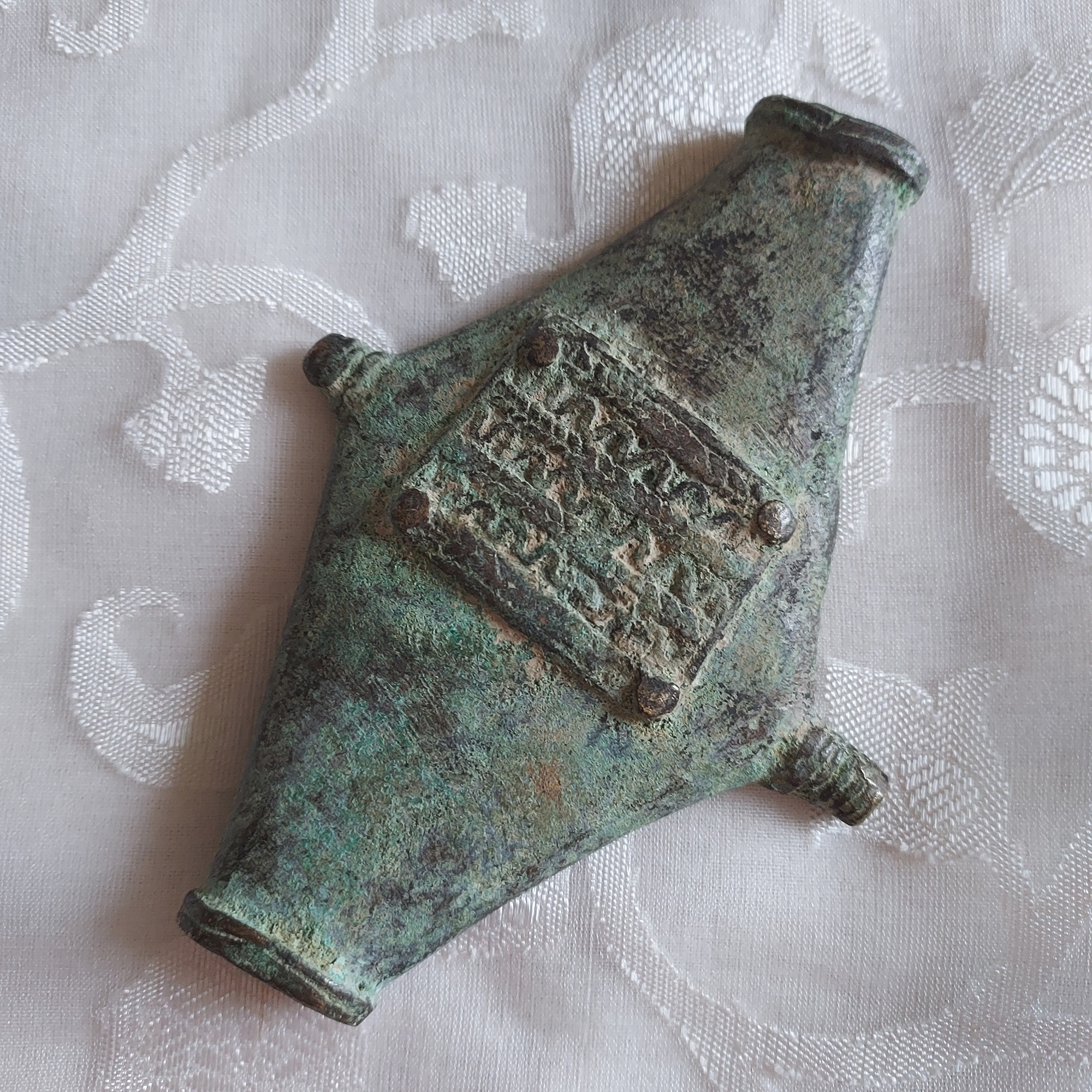
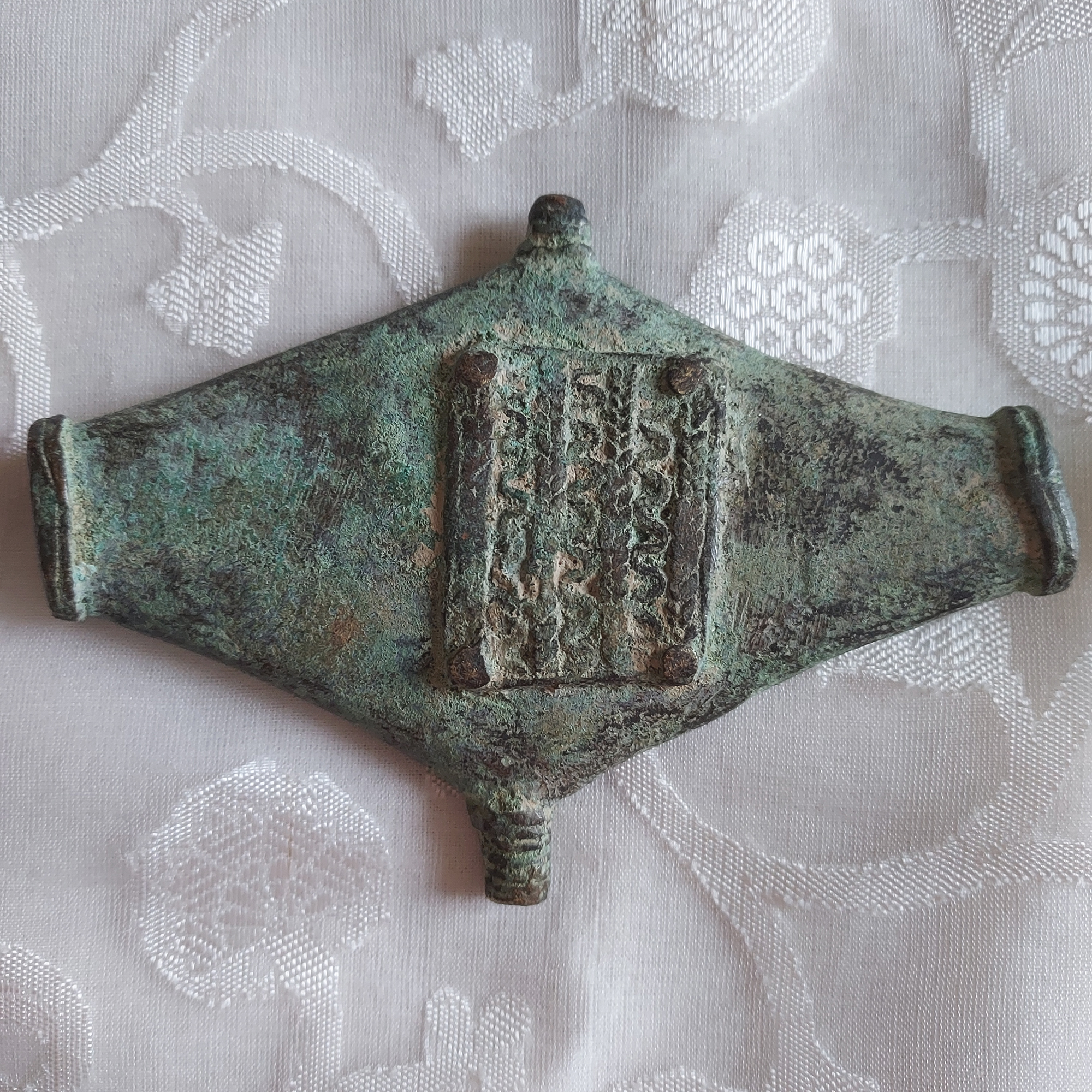
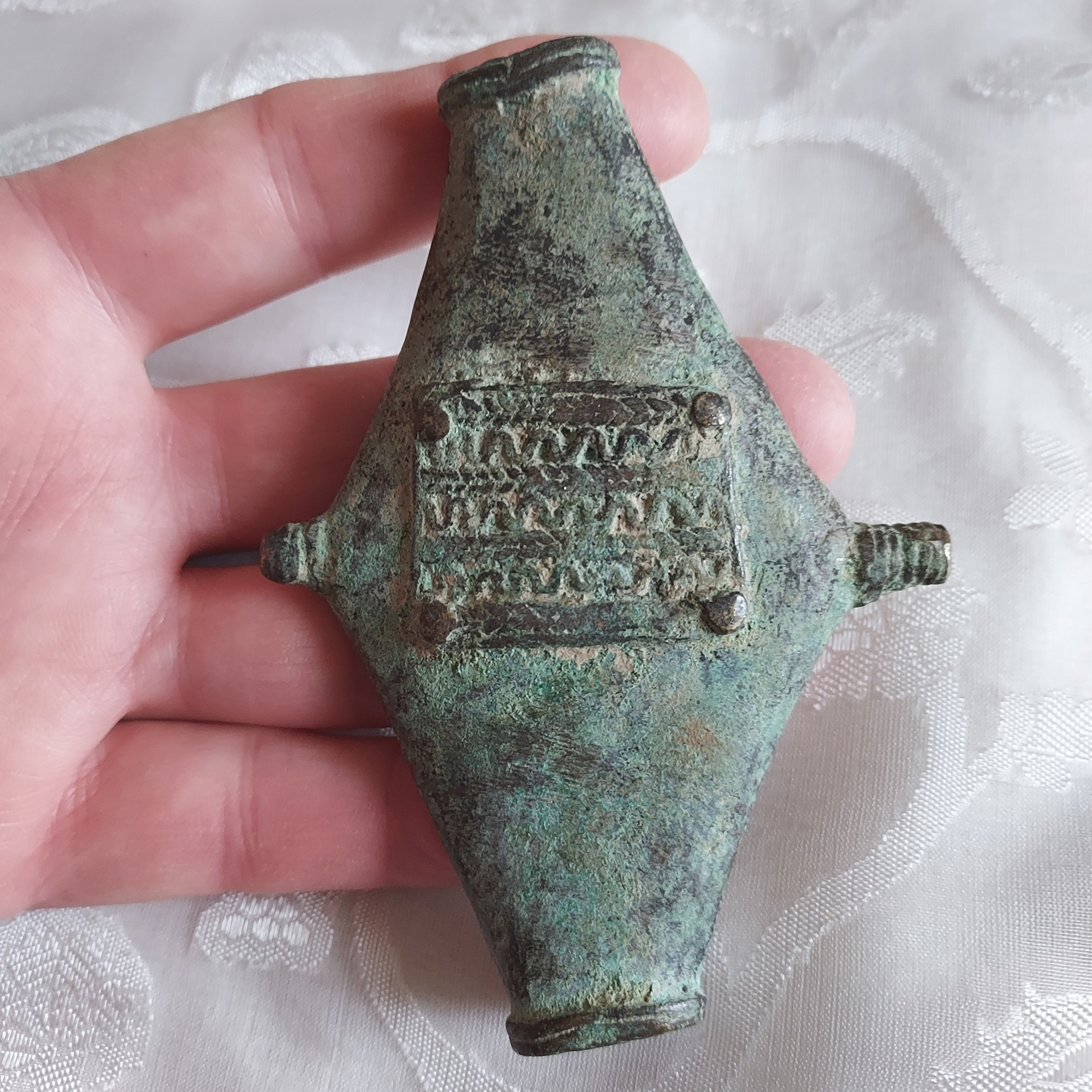
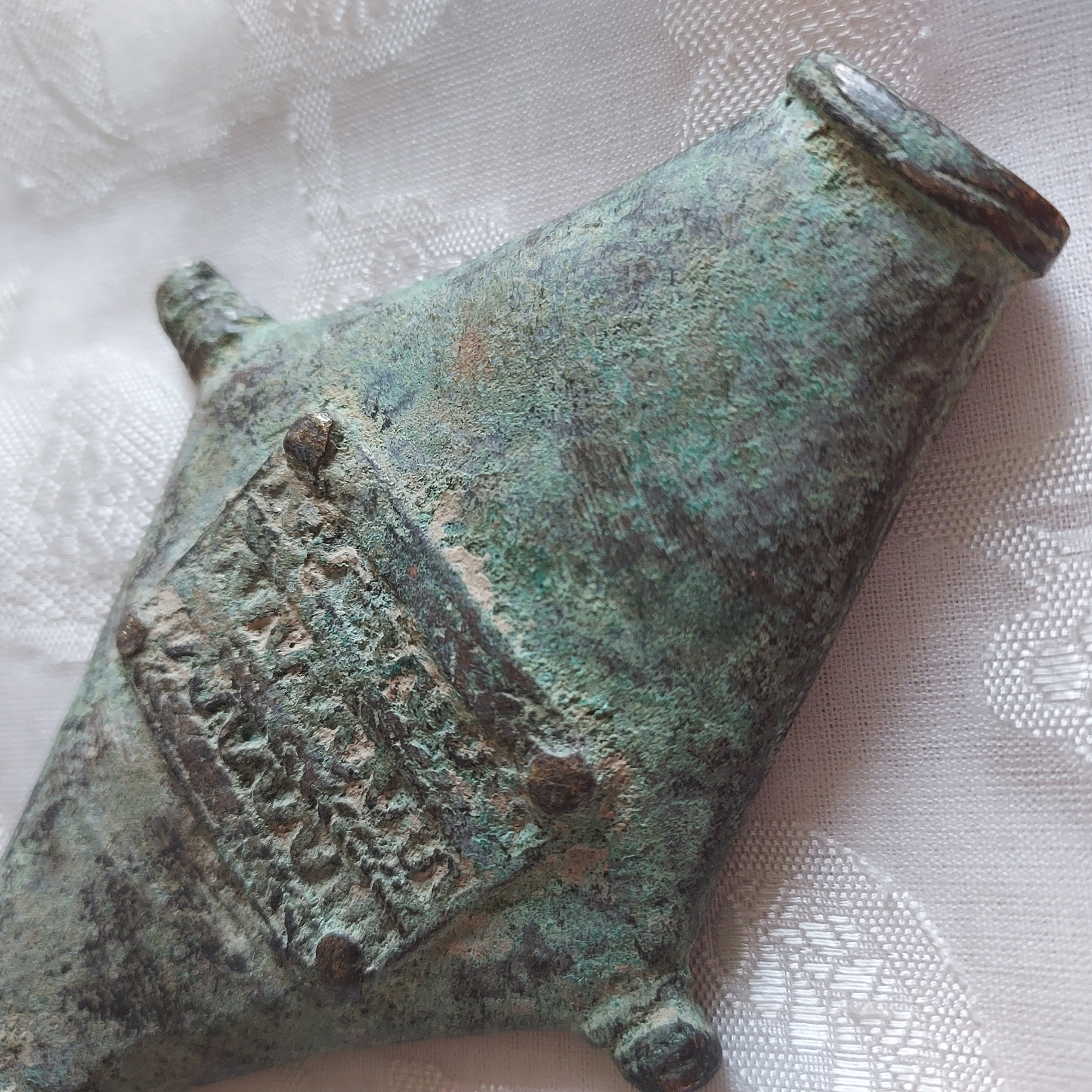
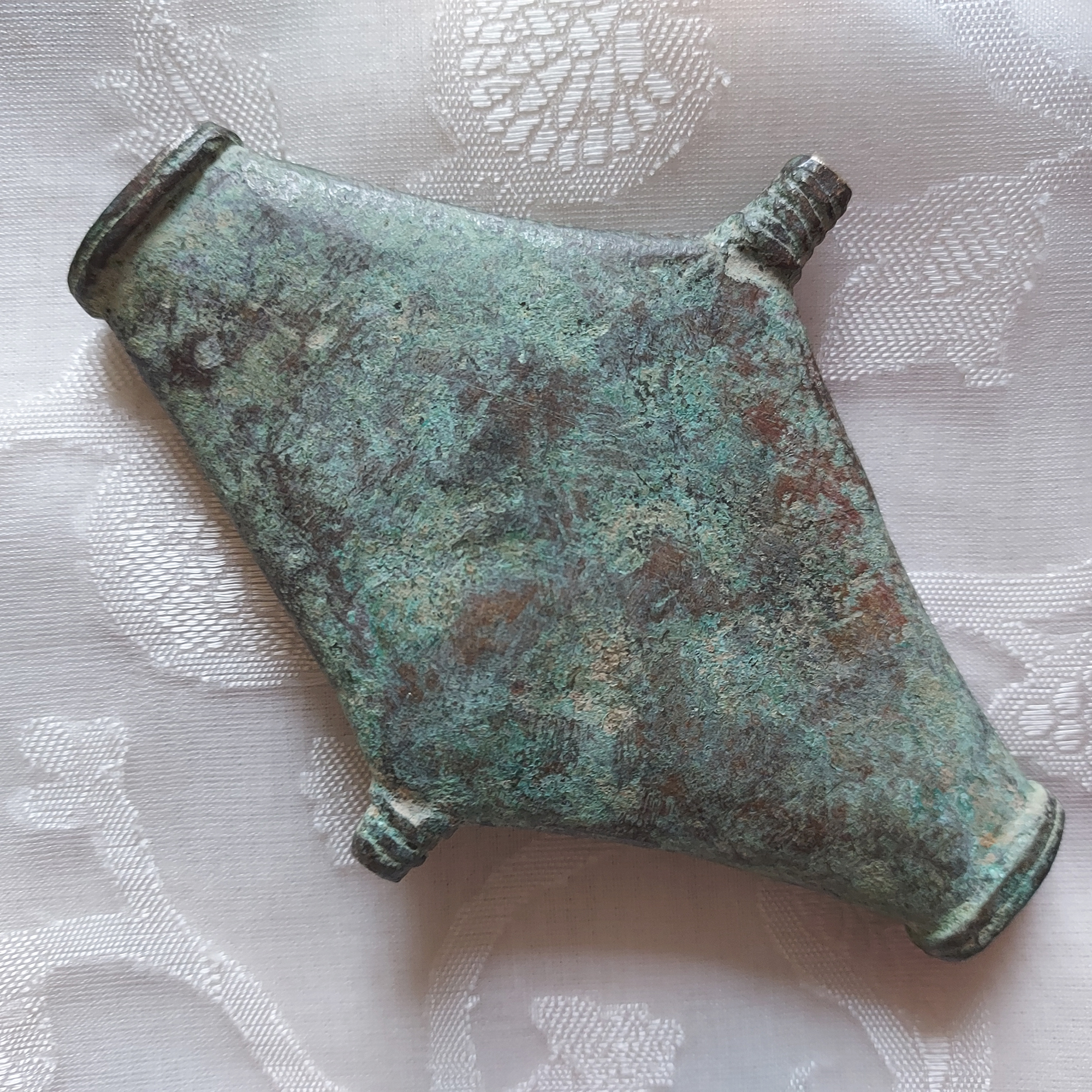
This rare Djenné pendant from Mali was cast in copper alloy using the lost-wax technique. It displays a rich archaeological patina acquired over centuries.
The lozenge-shaped form is decorated with a central cartouche featuring undulating motifs that may represent serpents or other protective symbolic elements associated with the artistic traditions of the Inland Niger Delta.
Pendants of this type are believed to have served both decorative and amuletic functions. The sealed projections extending from the sides and ends suggest that the piece was worn in a vertical orientation.
Its elegant geometric design and carefully executed casting reflect the sophistication of Djenné metalworking during the late medieval period.
Collected in Mali, this hollow-cast pendant dates to the mid-15th century and is a fine example of West African bronze artistry.
Dimensions: 7 x 9.8 cm (2 3/4 x 3 7/16 in)
References:
Afrique de l’Ouest – Bronzes et autres alliages, André Blandin (2000)
African Forms, Marc Ginzberg, ed. Skira (2000), p. 253