Description
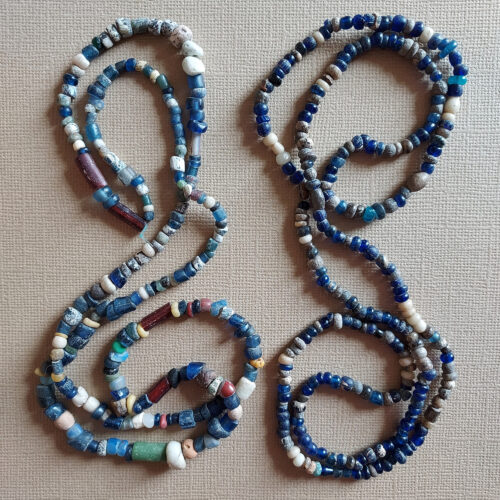
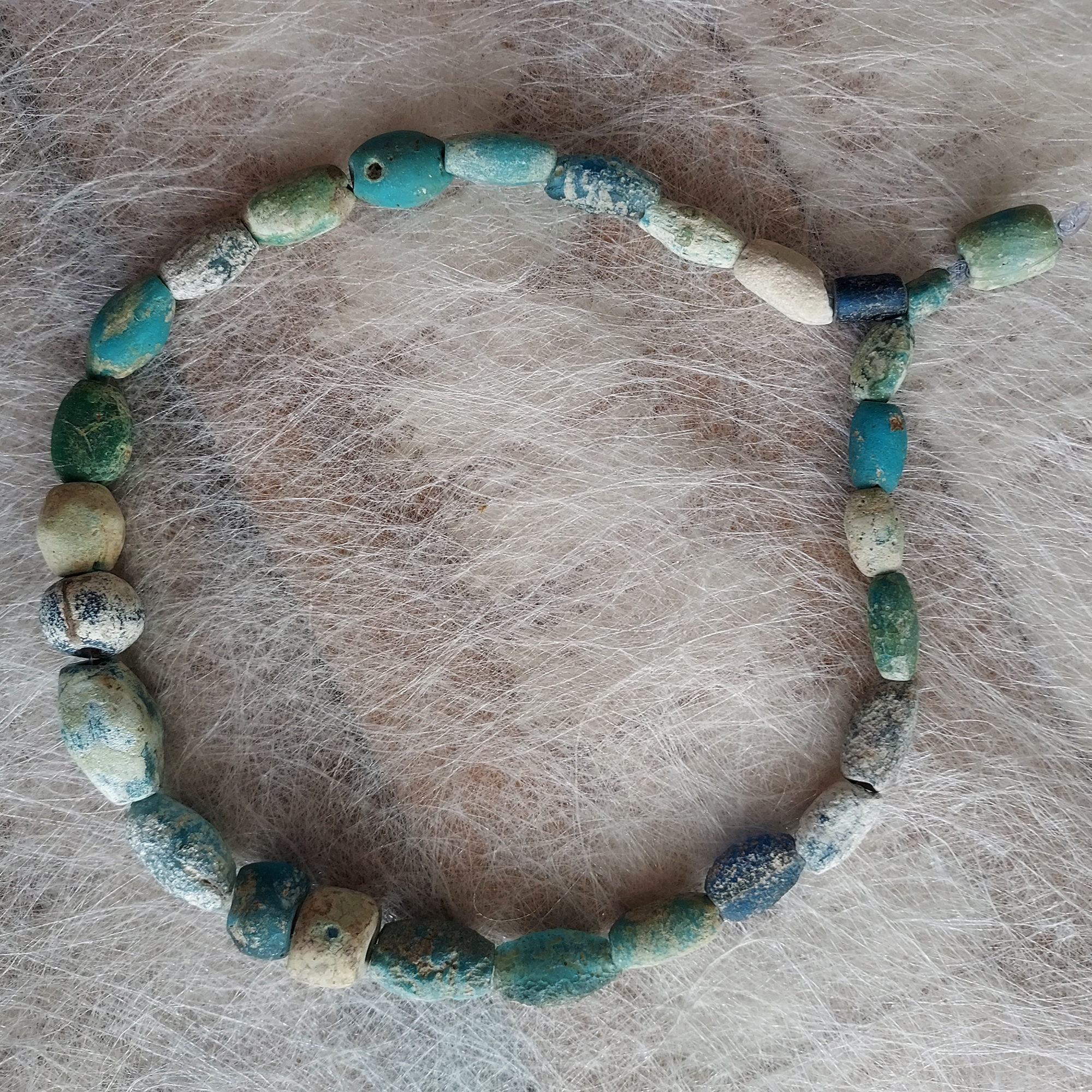
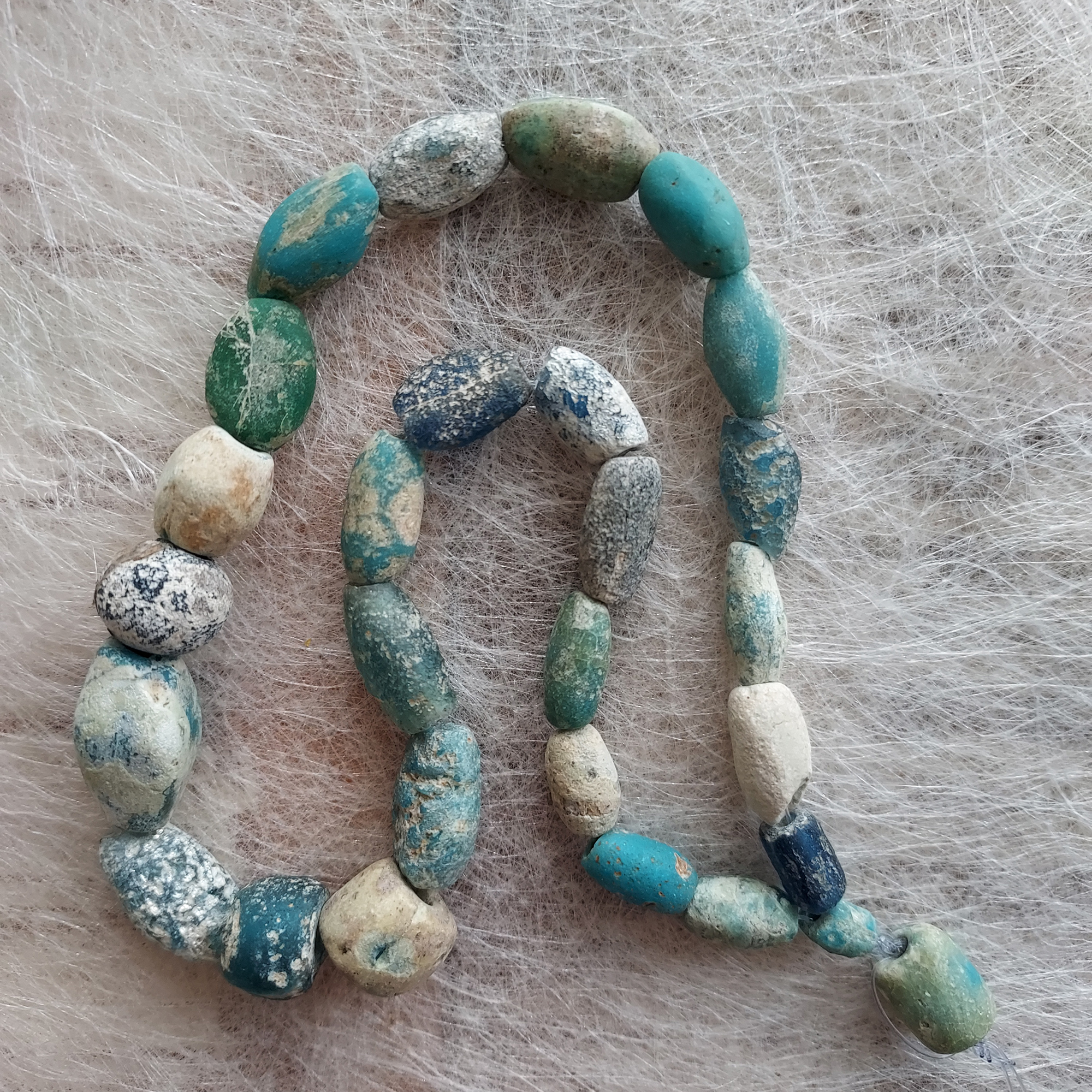
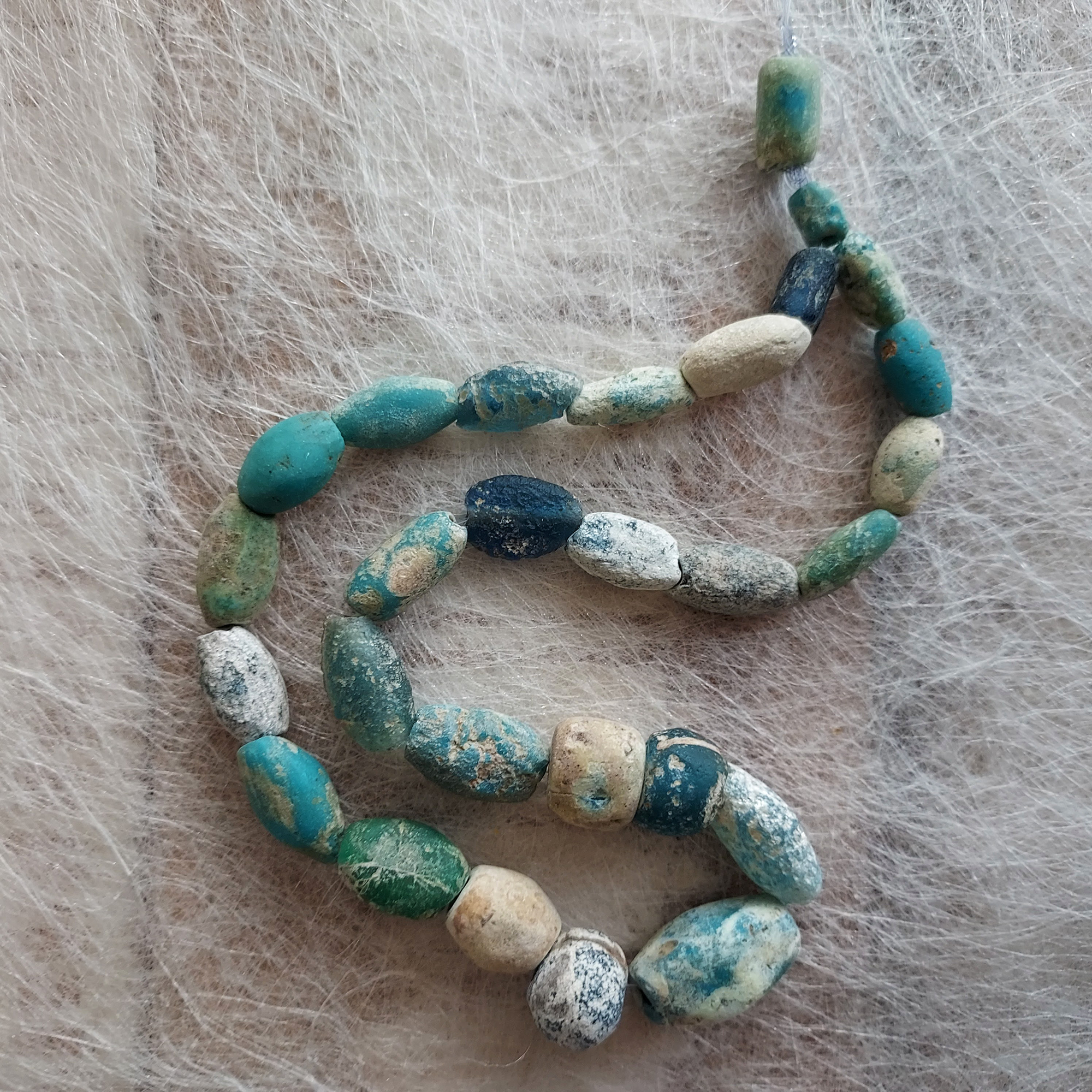
Ancient faience and Islamic period glass beads with a rich burial patina and iridescence.
Faience, with likely origins in Egypt, is a glazed non-clay ceramic material, with quartz as its main component.
Crossing the desert towns of Djenne, Gao and Timbuktu, beads and a variety of goods were traded along these ancient caravan routes.
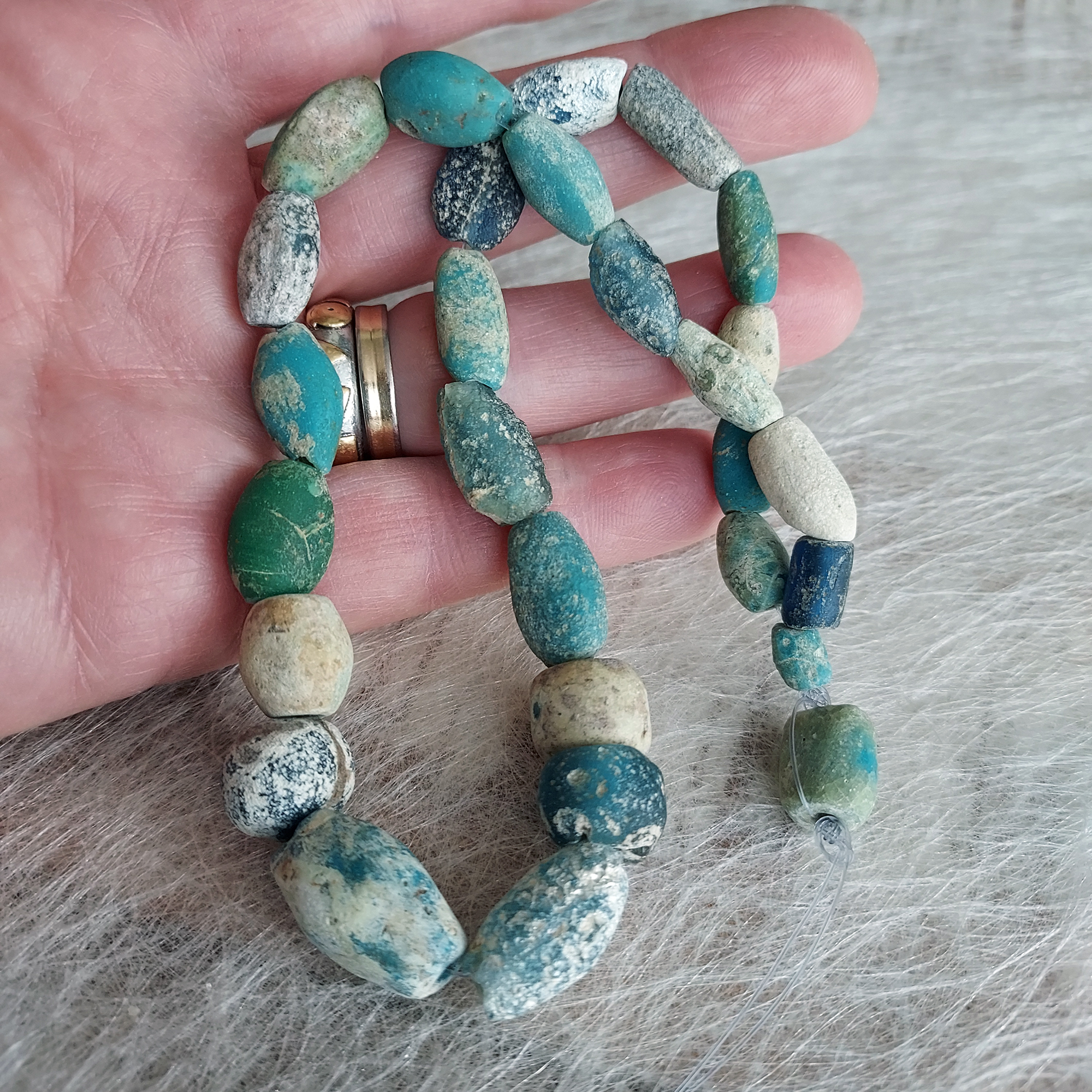
The wound beads, in rich colours of blues, greens and turquoise are in a various shapes, with a large four facet focal bead.
There is some surface pitting, normal for beads of such great age.
Strand of 28 beads, temporary stringing on nylon.
Dating to the 1200-1600s,
Collected in Mali.
Length: 8mm to 22mm
Width: 6mm to 12mm
Strand: 35 cm (13 1/2″)
About ANCIENT BEADS
Islamic-period beads traveled extensively along the trans-Saharan trade routes, reflecting the Islamic world’s central role in medieval commerce. As traders moved across continents, seas, and deserts, beads became valuable symbols of wealth, rank, and cultural identity.
Islamic glass bead production spanned several centuries. During this period, artisans developed a wide range of complex and varied techniques that continue to fascinate historians and collectors alike.